Culture Is Built by the Conversations We Make Room For
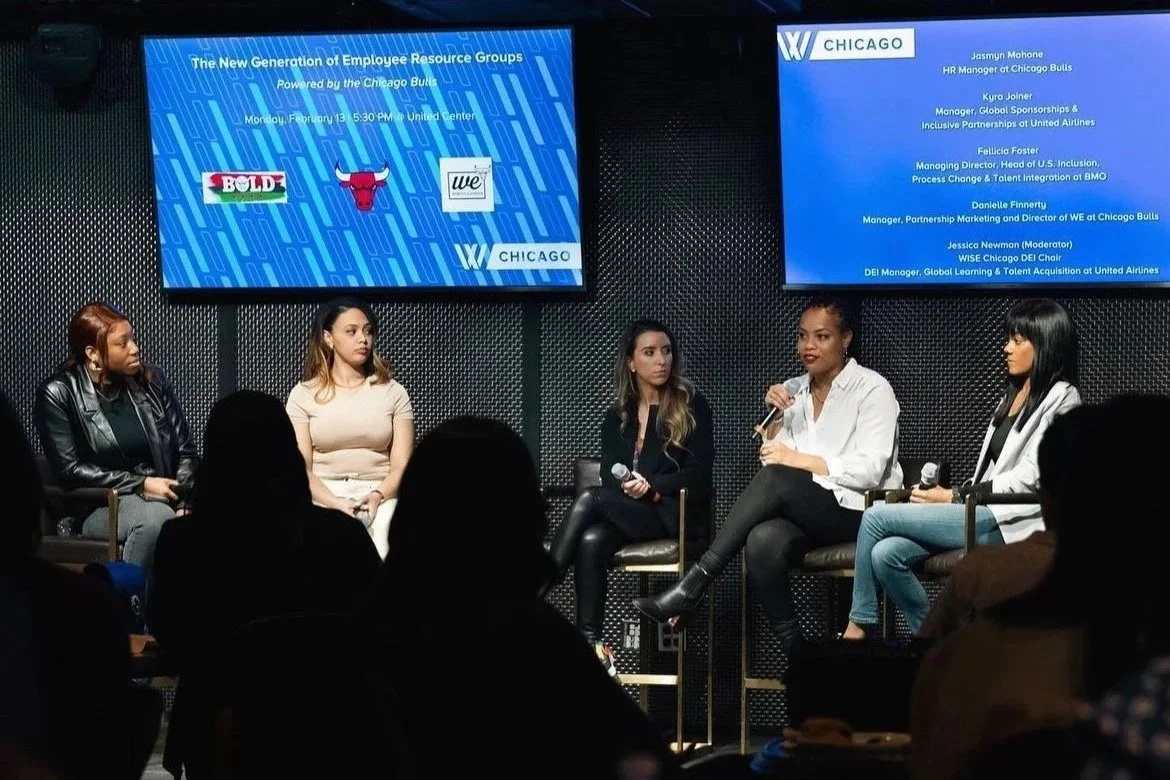
Some of the most important conversations about organizational culture happen outside formal meetings. They happen when people come together around shared experiences, exchange perspectives, and create space for others to be heard.
I had the opportunity to participate in a Women in Sports and Events (WISE) Chicago panel discussion, focused on the next generation of employee business resource groups, hosted in collaboration with the Chicago Bulls.
The conversation explored a topic that continues to matter across industries: How employee business resource groups evolve to meet the needs of changing workforces and organizations.
FROM CONNECTION TO CONTRIBUTION
Employee business resource groups can provide a sense of community for people who share experiences, interests, or professional goals but that potential extends beyond connection. When supported effectively, these groups can create opportunities for mentorship, professional development, leadership visibility, employee recognition, community engagement and meaningful dialogue across an organization.
They can also help leaders better understand the experiences and perspectives of their employees leading to stronger organizational culture. That requires more than establishing a group or hosting an event. It requires a clear understanding of what the organization hopes to achieve, what members value, and how the business resource group connects to the broader organization culture.
THE ROLE OF INTENTIONAL DESIGN
Like any other organizational initiative, employee business resource groups benefit from thoughtful strategy. What is the group’s mission? Who is it designed to serve? How can its activities create value for employees while contributing to the organization? And how will that value be recognized?
A strong mentorship program may influence someone’s career for years. A conversation that introduces new perspectives may change how a team works together. Each outcome matters, but each requires a different approach to support and evaluation.
CULTURE IS A SHARED RESPONSIBILITY
I appreciate opportunities to exchange ideas with people who are thinking critically about the future of work, leadership, and the experiences that shape organizational culture. As a current board member in an employee business resource group, conversations like these remind me that culture isn’t created through internal messaging alone. It’s influenced by creating space for meaningful program and initiatives, the connections developed, greater visibility for employees and supporting the diverse needs and perspective of the business resource group’s memebers. n
MY TAKEAWAY
Employee business resource groups are most valuable when the mission supports both what the employees value and the priorities of the organization.
The opportunity is to create communities that support employee growth, contributions, and influence the culture within the organization and community around them.
Continue the conversation: Linkedn